News
The LiDAR paper on Light Rail trees that won an HKIE award
Published
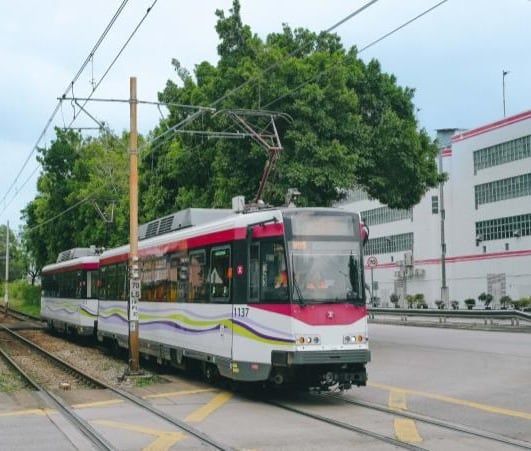
MTR Corporation monitors trees along the open sections of its Light Rail network with LiDAR mounted on vehicles in passenger service. Engineers from MTR Corporation and Kodifly wrote a paper on that work. The paper, Monitoring Tree Intrusion along Railway Networks Using LiDAR Technology, is one of the 2025 winners of the Hong Kong Institution of Engineers (HKIE) Outstanding Paper Award for Young Engineers/Researchers.
Managing tree risk on an open railway
On the open sections of the network, trains share the road with traffic and with the trees beside it. According to MTR Corporation’s press release of 16 May 2025, fallen trees are a common cause of disruption in bad weather. Branches that reach toward the overhead line are a risk before a storm arrives.
MTR Corporation already manages that risk. A dedicated tree management team carries out large-scale surveys and records the condition of trees in an electronic database. Before each typhoon season, the team increases inspections, prunes branches and crowns, and removes dead branches.
A walking inspection can cover only part of the network in a day.
Train-mounted LiDAR
According to the press release, MTR Corporation’s innovation and technology team introduced a further method in 2023. The trains carry the survey. LiDAR units are mounted on the roof of two Light Rail vehicles. While the vehicles are in passenger service, the sensors measure the height and shape of each tree, and its distance from the operating area.
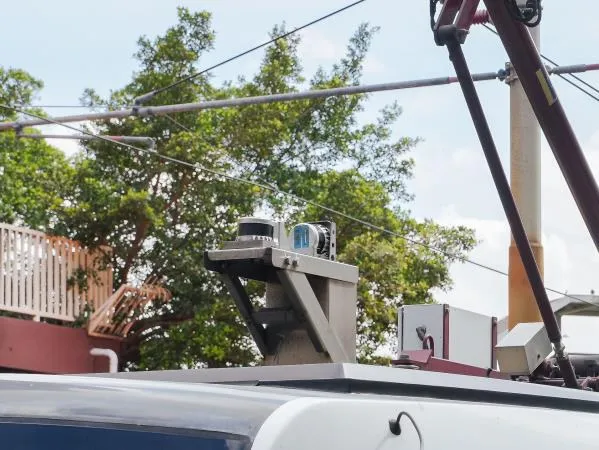 A LiDAR unit on the roof of a Light Rail vehicle. Photo: MTR Corporation.
The press release states that artificial intelligence then assesses the risk of a tree growing into the operating area. Where a tree presents a higher risk, the system sends an alert to the tree management team. The team can inspect and prune before the risk develops.
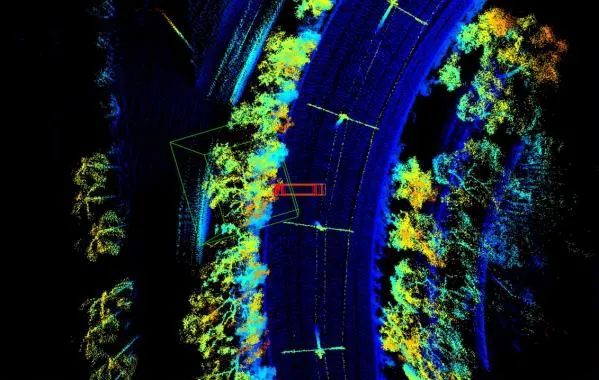 A LiDAR point cloud of trees beside the track. Image: MTR Corporation.
A monthly survey of the network
Two vehicles are enough to survey the whole network once a month, in addition to the team’s regular inspections. Since 2023, the system has issued more than 600 alerts.
The alerts set the order of work. Teams can attend first to the trees the data identifies. The press release describes the analysis as objective, accurate and insightful. The system also received a silver medal at the International Exhibition of Inventions Geneva in 2024.
From operations to published research
HKIE lists the paper among its 2025 award winners. It appears in HKIE Transactions, Volume 32, Issue 4 (Award Issue), published on 2 January 2026.
The abstract sets out the operational case. Trees near the track can cause service disruption and potential accidents, especially on open sections where the line meets road traffic. The keywords cover vegetation management, gauging, object detection and railway safety.
Applying the approach across corridors
Tree monitoring is one use of a wider method. Measure a corridor the same way each time. Compare the result with the previous record. Raise an alert tied to dated evidence. The same method applies to slopes, overhead lines and other assets that change slowly and fail quickly. Kodifly sets out that method on the rail and transport corridors page.
Kodifly is honoured to have contributed to this research with MTR Corporation.
To see how a dated record would work for a line, talk to us.